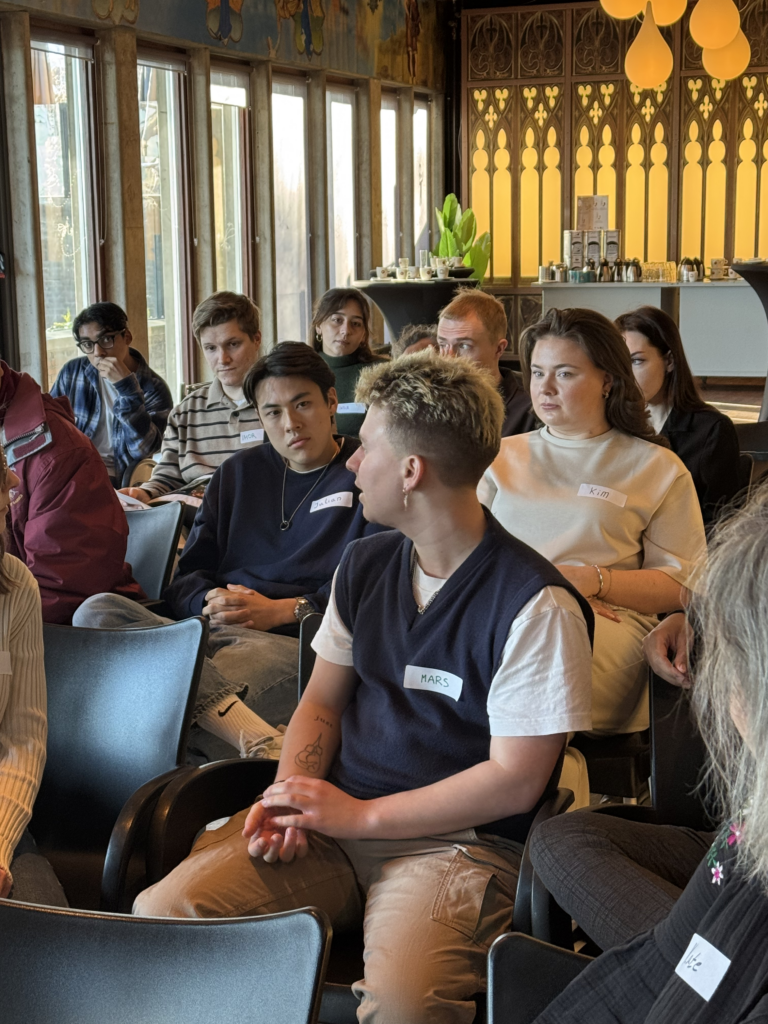
The exchange program that took place in Belgium and the Netherlands offered young history enthusiasts the opportunity to delve deep into the historical events that shaped our modern world, around the main theme of the exchange: Operation Market Garden.

Participants engaged in a variety of creative projects, including video production, podcast creation, and historical storytelling, enabling them to explore and express the human stories behind the conflict.

As the exchange traversed some of the places touched by the operation, participants gained invaluable insights into the war’s legacy. This program wasn’t just about learning history; it was about bringing it to life through modern media. As participants, they worked collaboratively with fellow participants, shared perspectives, and improved their skills in storytelling and digital media.

Whether they interviewed locals with personal stories to tell, captured the essence of historical sites on film, or recorded narratives and interviews for a podcast, they contributed to preserving these vital memories for future generations. The program was an educational adventure and part of a living history that continues to resonate today.

On The Agenda

highlights

Liberation Garden Museum

In 1940-44, the German occupiers used the military camp in Leopoldsburg to train and send out tens of thousands of troops to Europe. They also used the camp as a prison and execution site for those who resisted the Nazi regime.

National Monument Kamp Vught

Camp Vught, the former Konzentrationslager Herzogenbusch, was the only SS concentration camp outside Nazi Germany and the territory annexed by Nazi Germany during the WWII. The camp held nearly 32,000 people between January 1943 and September 1944. For many prisoners, Vught was a way station to other camps. For some 12,000 Jewish prisoners, Vught was a gateway to the extermination camp.

Freedom Museum

The Freedom Museum is situated in the middle of the former combat zone of Operation Market Garden and the Rhineland Offensive.

Airborne War Cemetery Oosterbeek

Arnhem Oosterbeek War Cemetery contains the graves of most of those killed during the September landings, and many of those killed in later fighting in the area. Both the Polish victims who fell on the north side of the Rhine and those who died near Driel on the south side found their final resting place at the Airborne War Cemetery in Oosterbeek.

Detailed Program

On the first day, participants gathered at the central station in the Dutch city of Eindhoven, from where they traveled to the Liberation Garden Museum in Leopoldsburg, Belgium. At this new museum, participants had time to explore the exhibition and to better understand the “Garden” part (ground operation) of Operation Market Garden. After the museum visit, they went to the Belgian and Commonwealth war graves nearby.


After their first night in the Youth Hostel in Eindhoven, participants traveled by coach to National Monument Kamp Vught. In the permanent exhibition “Camp Vught: seven seasons and 32,000 stories,” visitors explored the history of the camp through personal stories and objects relating to people from up to 36 different nationalities. Special attention was paid to the roles people were forced, or not, to assume: that of victim, perpetrator, bystander, and helper. Participants had enough time to conduct their research: podcast and video creation as well as history writing. In the afternoon, they traveled back to the same hostel as the previous night.

On day three the participants traveled by coach to the municipality of Berg en Dal, where the Freedom Museum was located. The Freedom Museum stood in the middle of the former combat zone of Operation Market Garden and the Rhineland Offensive. Before the group paid a visit to the Canadian War Cemetery in Groesbeek, everyone had enough time for research. In the afternoon, they traveled to a Youth Hostel in Arnhem for a free evening.

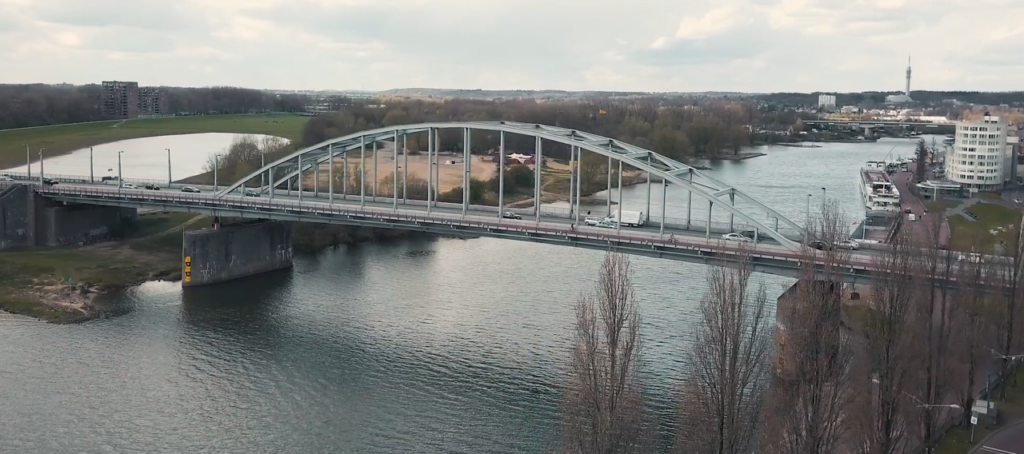
Day 4 was planned to visit Arnhem and its surroundings, as well as the Airborne Museum Hartenstein. The museum showed how the Battle of Arnhem unfolded. It took place in September 1944 in the area between Ede and Arnhem and was part of the Allied operation “Market Garden.” British, American, and Polish airborne troops had to occupy the bridges over the rivers from the Belgian border to Arnhem. The museum was located in the former Hotel Hartenstein. This former hotel had been the headquarters of the 1st British Airborne Division under the command of Major General Roy Urquhart during the Battle of Arnhem. The hotel was largely destroyed during WWII but was restored after the war. After the museum visit and time for research, the group spent a free evening at the hostel.

The last day focused on hiking on the Liberation Route trails: the perimeter route. This route described the battle in Oosterbeek via different points of interest. One of those points of interest was the Airborne War Cemetery Oosterbeek, where the group had a guided tour. Participants were brought to the central station of Arnhem at the end of the day, where the program ended.

Their Experience

Testimonials

“What drew me to this youth program was its unique blend of history and content creation. I was not very familiar with Operation Market Garden before, the thoughtful organisation of the program, combined with the extremely immersive sites, made the experience wonderful.”
Gala, 18 years old
Germany
“The LRE exchanges are a truly enriching experience for young people. They reveal in such detail the WWII events, always giving great importance to the victims and their memory, which is something that has deeply touched me and will ensure this experience is one I will never forget. The dedication and professionalism of the team are evident, that’s why I keep coming back and always bring my friends!”
Inés, 19 years old
Spain
“At first, I felt a bit apprehensive towards the topic, but at the same time I was happy to be a part of the exchange. I thought everyone else had more knowledge than me, but we are all learning a lot. Going to different places every day is my favourite part about the program.”
Elia, 25 years old
Italy
“When my friend took part in the exchange in February and told me about the great time she had, it encouraged me to also sign up. I’m having an incredible time, I have learned a lot of new facts about WWII, read moving stories about the victims and visited many new places. Kamp Vught was my favourite one. I have also met so many wonderful people from other countries, and I am looking forward to coming back for the next exchange!”
Marta, 18 years old
Spain