General Anders led Polish soldiers and civilians from Soviet imprisonment through Iran and the Middle East, forming the II Corps that fought in Italy, including Monte Cassino, Ancona, Rimini, and Bologna.
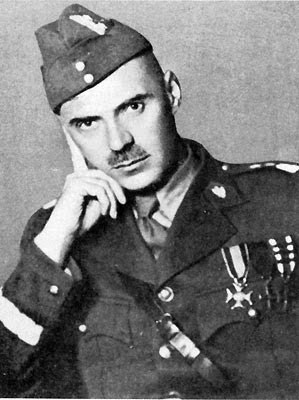
The story of General Władysław Anders and the army he led is one of resilience, tragedy, and survival. After the Soviet invasion of eastern Poland on 17 September 1939, hundreds of thousands of Poles were arrested or deported to remote labor camps. In the spring of 1940, the NKVD (Soviet secret police) murdered about 22,000 Polish officers and officials in the Katyn Massacre. Among those imprisoned was General Anders, held in Moscow’s Lubyanka prison under harsh interrogation. His survival owed much to Soviet interest in him as a potential ally after Germany’s invasion of the USSR in June 1941.
Following the Sikorski–Majski Agreement of 30 July 1941, the Soviets granted an “amnesty” to Polish citizens. Anders was released on 4 August 1941 and placed in command of a new Polish force on Soviet soil. However, shortages of food, equipment, and distrust of Soviet authorities made the position untenable. In 1942, Anders negotiated the evacuation of his soldiers and families through Iran. By the end of that year, roughly 115,000 people had escaped the USSR: about 74,000 soldiers and 41,000 civilians, including thousands of children. Many civilians later resettled in India, Palestine, Mexico, or New Zealand, while Anders’ soldiers regrouped in Iraq and Palestine under British command.
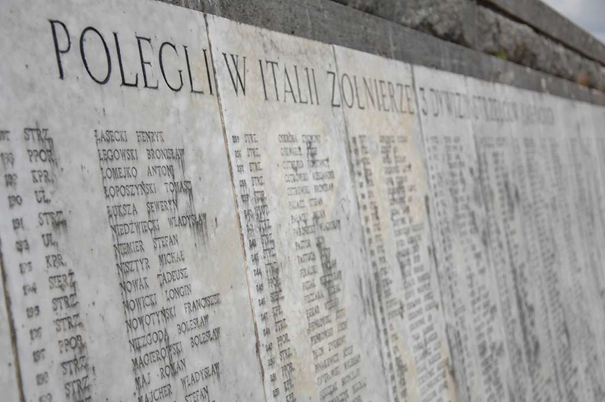
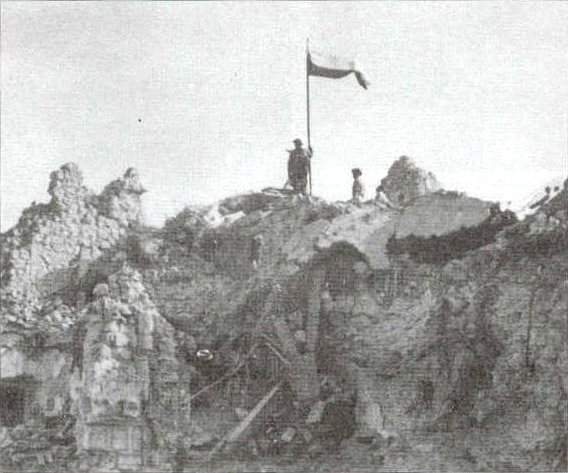
In 1943, these forces were reorganized into the Polish II Corps. Their most famous campaign came in Italy. At Monte Cassino in May 1944, they captured the ruined abbey and broke through the Gustav Line. Later they secured the port of Ancona (July 1944), fought along the Gothic Line near Rimini, and helped liberate Bologna (April 1945). Their sacrifices were immense: over 4,000 were killed in Italy, with many buried at Monte Cassino.
While Anders’ men fought in Italy, the Red Army advanced into Poland, suppressing the underground resistance and preparing the ground for Soviet control. The Yalta Conference (February 1945) sealed the loss of Poland’s eastern lands, from which many of Anders’ soldiers had come. After the war, thousands chose not to return. The Polish Resettlement Act of 1947 in Britain gave them the chance to build new lives in the West.
General Anders died in London in 1970, but was buried at Monte Cassino, beside the soldiers he had led.