Milan’s central train station has a hidden part called the ‘21st rail’.
From there, on 6 December 1943, the first train departed, carrying 169 people who were deported to Auschwitz-Birkenau.
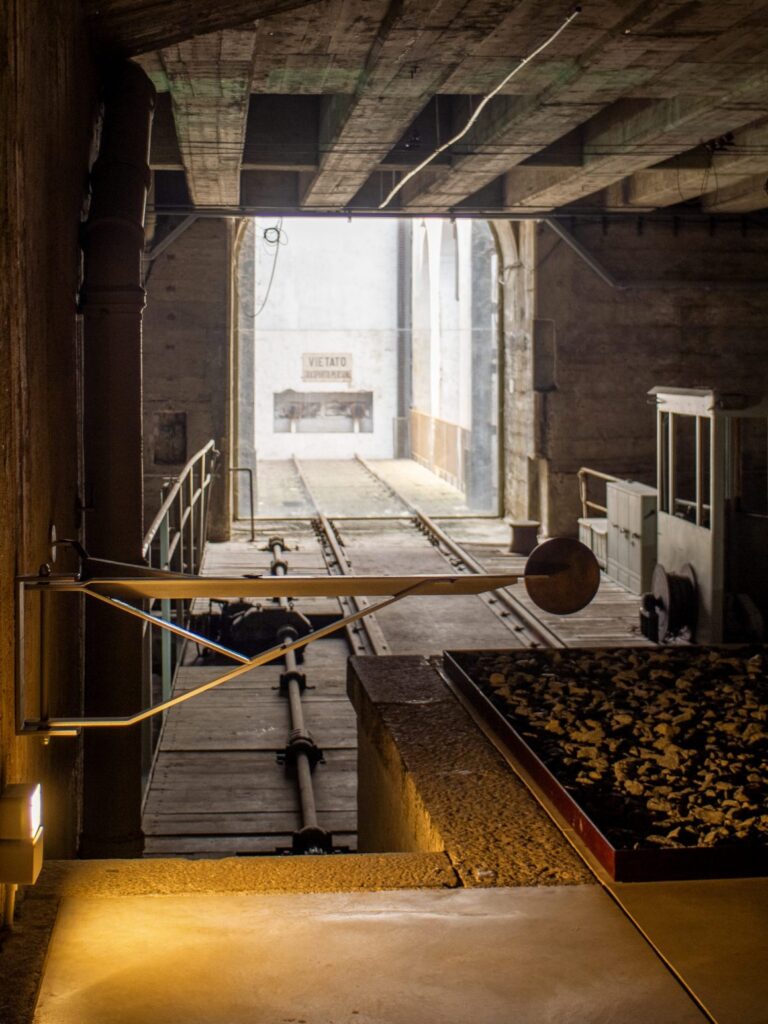
The Milan Memorial is the only section that remains intact as originally designed by architect Ulisse Stacchioli. He designed two separate floors, each serving a different purpose. The first floor was dedicated to passengers, while the second was used for the transport of goods. This latter section remained unknown to the public, accessible only to employees.
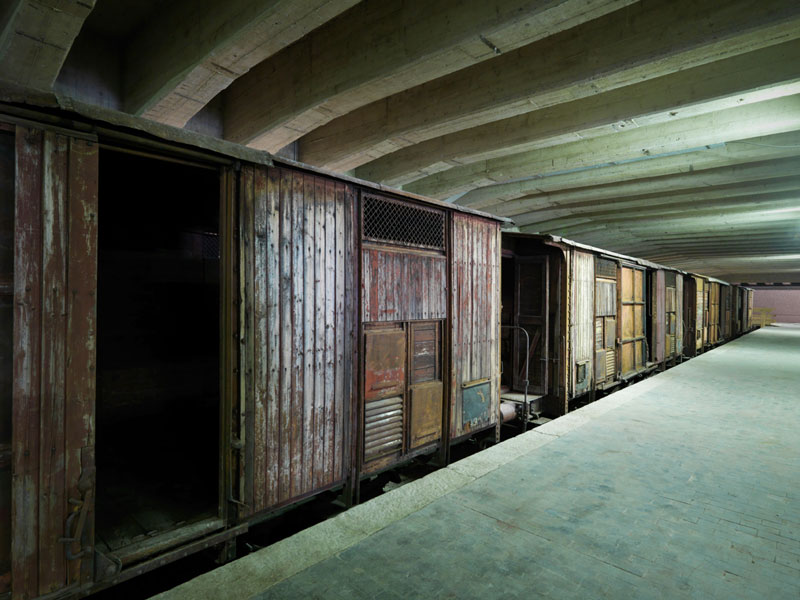
During the Nazi occupation, the ‘21st rail’ became a starting point for deportations to extermination and labour camps. At the memorial, original railcars from the same period and of the same model as those used for deportations are displayed. These railcars carried between 60 and 80 people at a time and then connected to the driver’s railcar with the help of employees who operated the railcar lift. The journey, which lasted several days, was marked by inhumane and unhygienic conditions, it represented the first traumatic act of cruelty.
On the dock, 20 plaques are arranged on three different levels, commemorating a convoy that departed from Milan Central Station. Most of these plaques feature Italian destinations, reminding visitors of the existence of sorting and concentration camps in Italy.
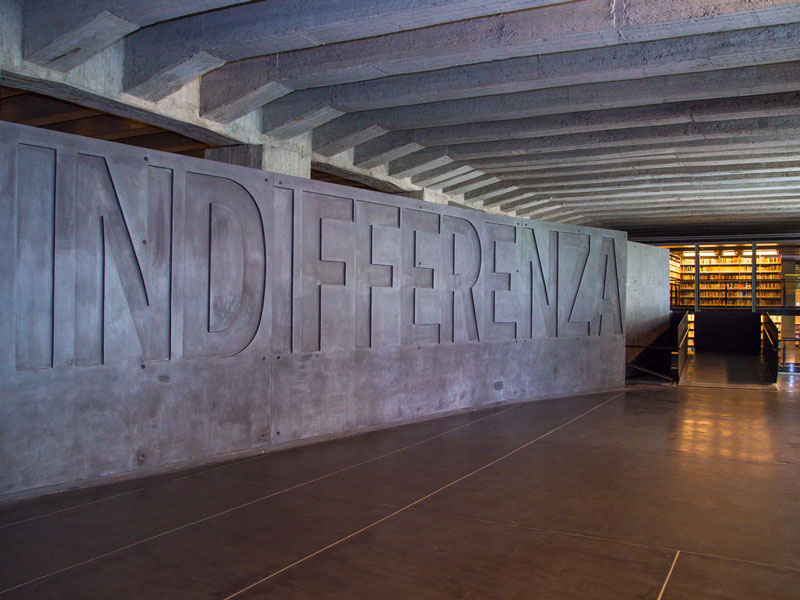
The Memorial was recreated to preserve its original design and to encourage reflection on the brutality of the Nazis and fascists. Notable installations, such as the wall with the inscription ’Indifference’, dominate the empty space at the entrance. The word ’Indifference’ was chosen by Liliana Segre, who emphasized that the Holocaust was made possible by the indifference of citizens.
The wall also isolates visitors from the outside world, symbolizing the emotions and experiences of the Jewish people during this dark time. The architects incorporated materials like iron, cement, and stone to engage visitors more deeply.
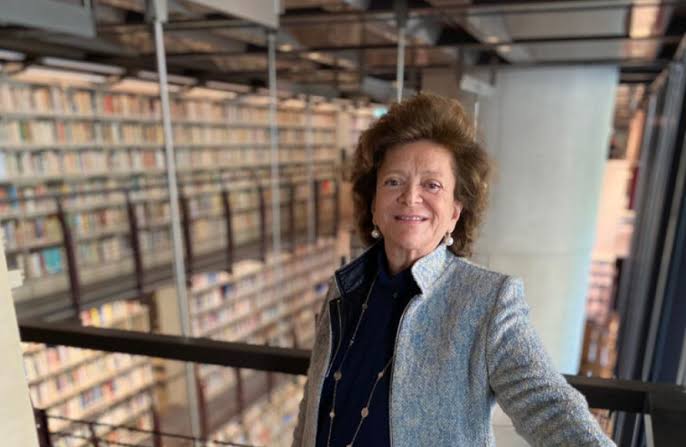
Located here is the CDEC (Centre for Contemporary Jewish Documentation), which has the purpose to preserve the memory through collecting thousands of books, including one by Liliana Picciotto. Lilian is a historian specializing in the study of Jews in Italy during the fascist period and the Republic of Salò, because of her research, she has helped to identify 9,000 missing Jews, and has restored their identities.
Additionally, the Shoah Memorial has the aim to foster a better future for generations to come. As part of this mission, artist Marcello Maloberti created the neon artwork ’INVITAMI NOTTE A IMMAGINARE LE STELLE’, which remains at the entrance of the memorial.