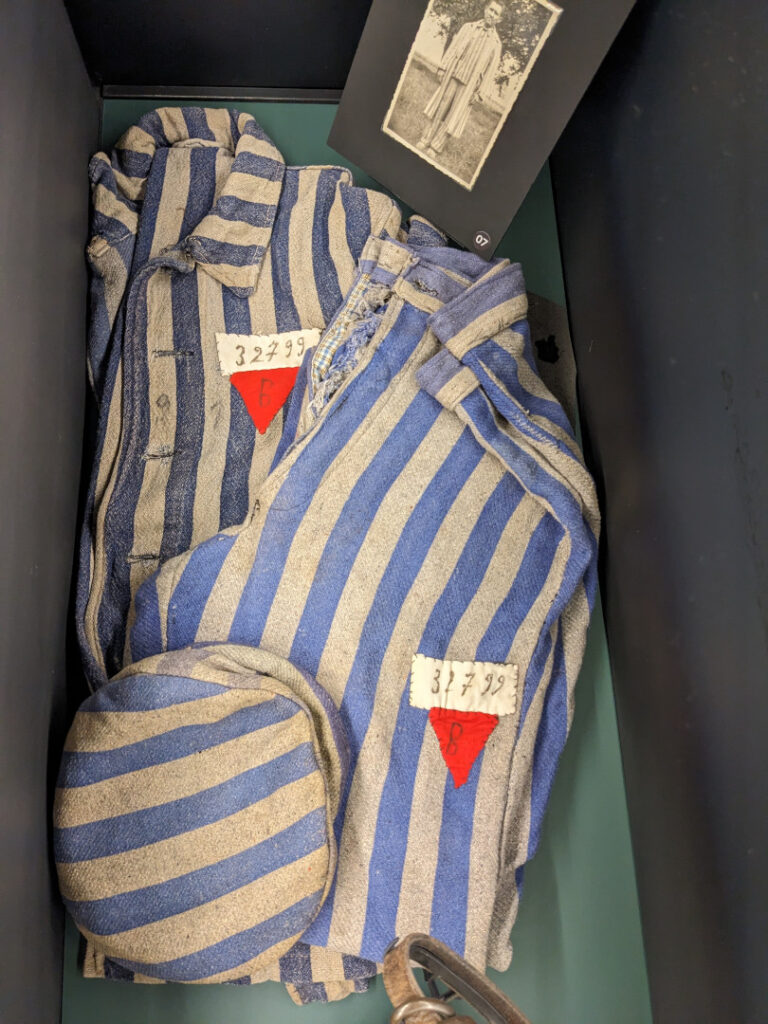
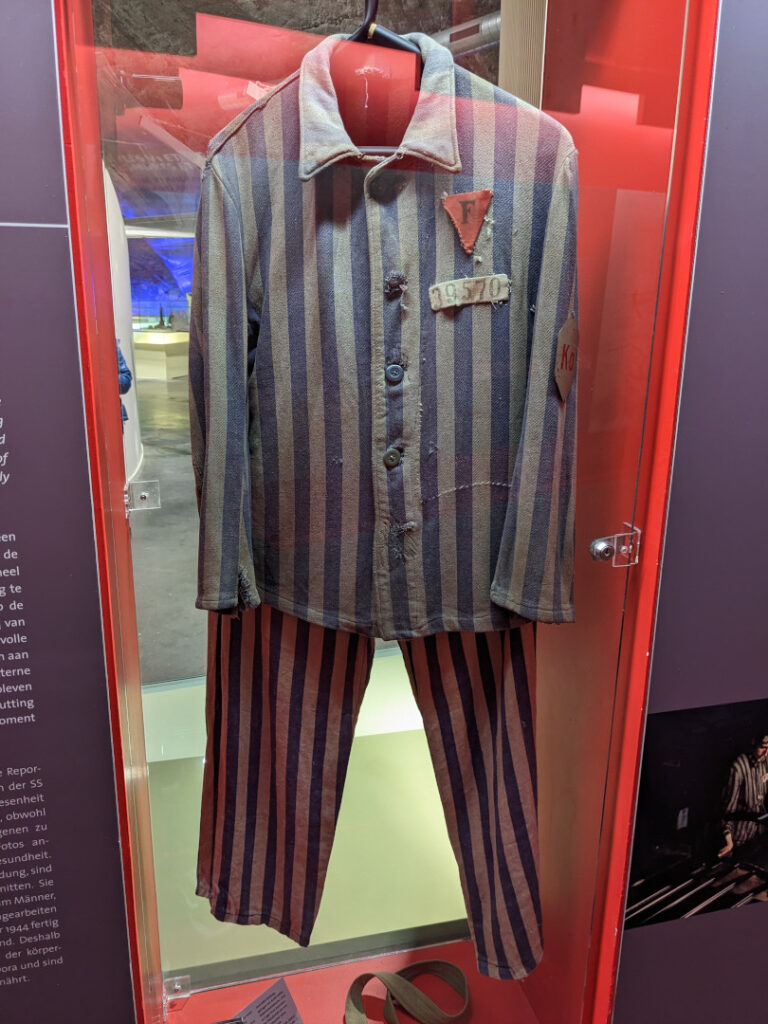
Various categories of people passed through concentration camps — civilians, members of the resistance and underground movements, and prisoners of war. Depending on a person’s ethnic background, their prison uniform bore markings that indicated their origin. These markings were often Latin letters. “B” stood for “Belgian”, “F” for “French” and so on. The situation was more complicated in Eastern Europe, where the Nazis most often labelled prisoners of Slavic origin as “R”, meaning Russian.
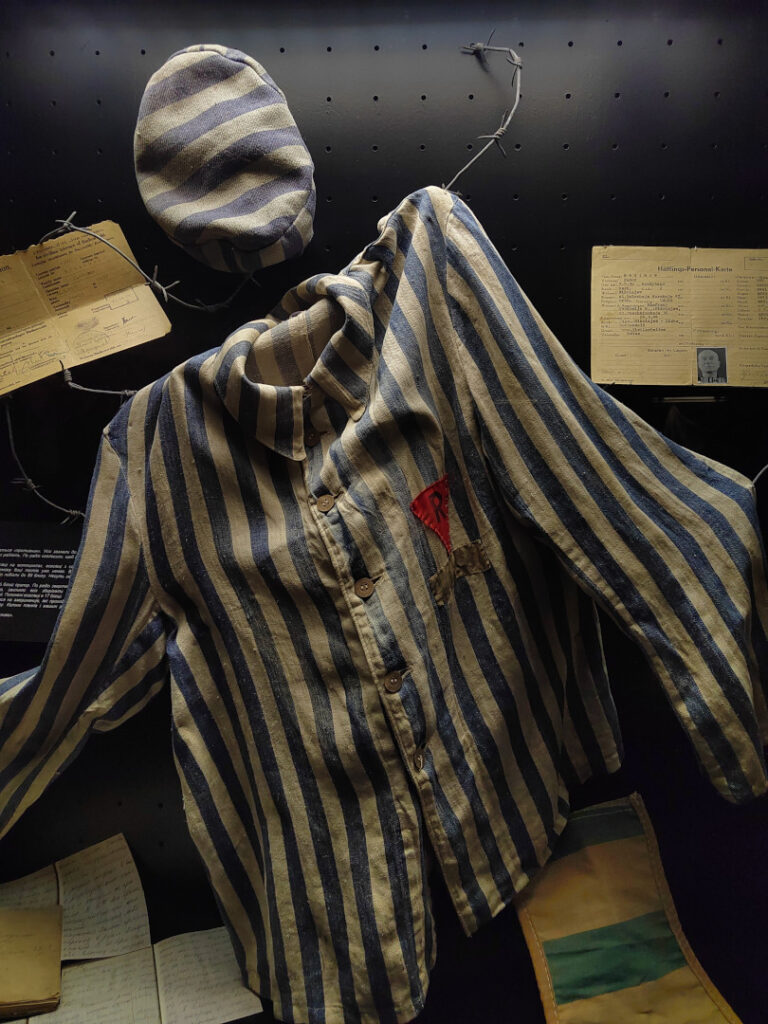
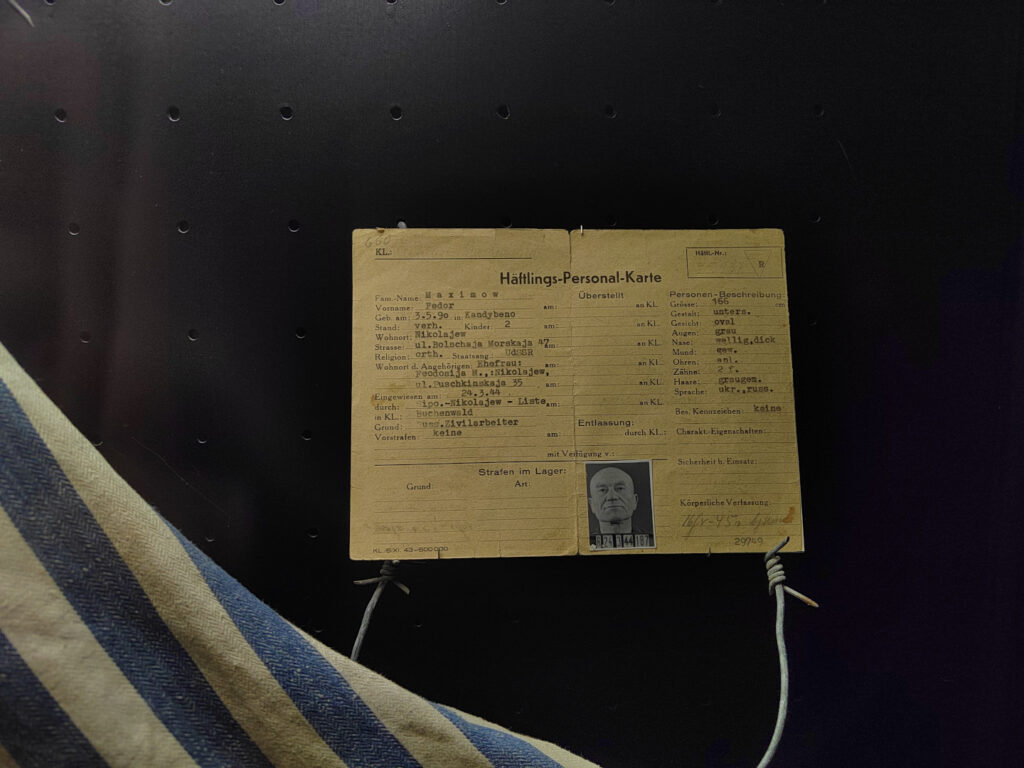
In the camps, the Nazis also kept documents containing rather detailed information about the prisoners. For example, in the exhibition of the National Museum of the History of Ukraine in the Second World War in Kyiv, one can see the prison uniform of Buchenwald concentration camp inmate Fedir Maksymov. His uniform bears the marking “R”. However, next to the clothing is his camp document — a personal card. It contains information about the prisoner, from which we learn that Fedir Maksymov was from Mykolaiv. In other words, he was Ukrainian, but the Nazis did not search the difference among the Eastern Slavs and therefore marked him as Russian.
The letters indicating a person’s ethnic origin were placed alongside other symbols that showed the reason for imprisonment. These symbols were often represented by inverted triangles of different colours sewn onto the uniforms. The colours of the triangles, in turn, indicated the reason for imprisonment. For example, a red triangle signified that the prisoner was considered a political enemy of the Third Reich. Brown triangles denoted Romani origin, while yellow ones indicated Jewish origin. Members of religious sects were marked with purple triangles.
Thanks to this system of markings, prisoners could be identified both by the Nazis and by other inmates. This was especially important given the existence of numerous camps established by the Nazis for the exploitation and extermination of people.