On April 29, 1945, the bodies of Benito Mussolini, his mistress Clara Petacci, and sixteen other close associates of the Italian dictator were thrown onto Piazzale Loreto. What followed was a day of euphoria and liberation in the heart of Milano, the capital of the Italian Resistance.
Although the execution of these eighteen figures of Italian fascism had been widely agreed upon by the members of the CLN (Comitato di Liberazione Nazionale), the fate of the bodies raised serious questions. What should be done with these corpses? More specifically, what should be done with the body of the man who, for twenty-three years, had personified Italian fascism? Indeed, the moment immediately following the execution of the top fascist officials had to be constructed: laden with meaning and a range of emotions, it became a key step in the Italian liberation.
The partisans ultimately chose to display the bodies at Piazzale Loreto, where, in August 1944, fifteen anti-fascist resistance fighters had been executed. From that moment on, the exposed corpses became an outlet for the population. They channeled the hatred and resentment stemming from more than two years of civil war and twenty-two years of fascist rule. Passersby spat on them, urinated on them, and hurled vegetables and objects at the already trampled corpses, despite the presence of a few soldiers attempting, more or less effectively, to guard the bodies. The decision to hang the eighteen bodies upside down at the gas station in the square was interpreted in part as an attempt to protect them from these attacks. But more importantly, it gave the event a strong ritual and commemorative dimension. Indeed, as Maria Pia Di Bella notes in Death of the Father, the images evoke medieval rituals once performed against the “infamous.”
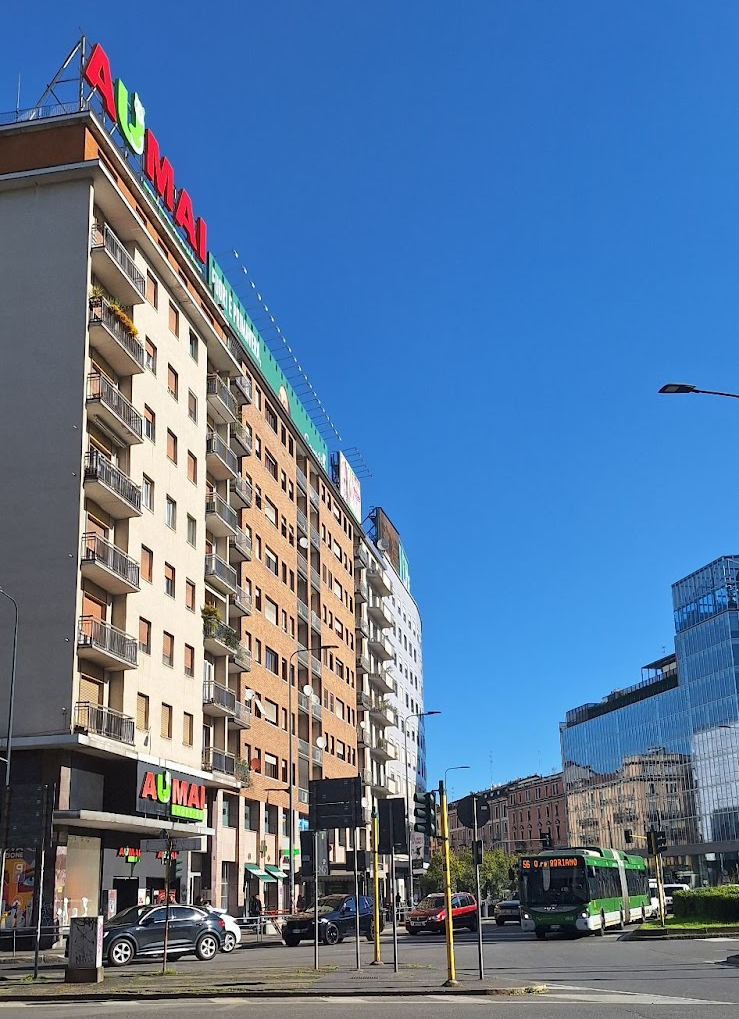
Thus, the memory of fascism and the Second World War in Italy began to be constructed immediately after the country’s liberation. The event itself, and especially the images captured for example by Christian Schiefer and Luigi Ferrario or by the U.S. Signal Corps documenting their advance through the country, serve to preserve the memory of an episode that is now invisible. Indeed, the square has totally changed: today it is home to a bank, insurance companies, shops, and boutiques.
Even today, Mussolini’s body continues to fascinate in its physicality. Published in 2011, Il corpo del Duce by Sergio Luzzato was adapted that same year into a documentary of the same name by Fabrizio Laurenti, which includes graphic footage of the execution. In both, the dictator’s body carries immense symbolic weight, capable of generating events and shaping collective memory, sometimes bordering on myth.