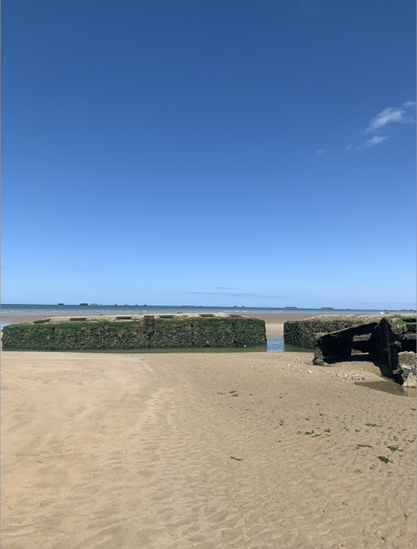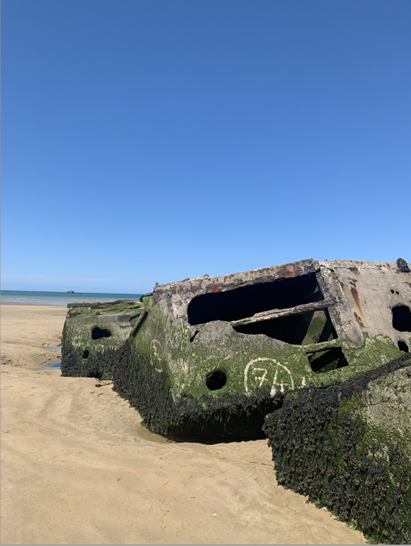
The construction of the Mulberry Harbours, two artificial floating ports in the British and American sectors in Normandy, was crucial for the Allied strategic victory that brought about the liberation of Western Europe.
On June 6, 1944, nearly 160,000 Allied troops crossed the English Channel to carry out Operation Neptune, the initial assault phase of Operation Overlord. This operation continued until August 30, culminating in the Allied victory over Nazi Germany.
Unlike the Germans, who supplied their front lines from within the continent, the Allies had to transport armaments, food, vehicles, and other essential resources across the Channel. With no secured port available upon landing, sustaining the offensive required an innovative solution to support the advancing troops over the twelve-week campaign.
Therefore, the Allies developed the artificial Mulberry harbor, which was critical for unloading reinforcements directly onto the beaches. The idea had been originally proposed by Winston Churchill during World War I, but it was only in World War II that it was fully realized. For the plan to succeed, the town of Arromanches, located in the British landing sector, had to be liberated and its radio station secured on June 6. This allowed the construction of Mulberry B.
Because relying on the capture of a functioning port was too risky, prototypes of the harbour were first tested off the Scottish coast, where weather conditions and distance from combat zones allowed for safe experimentation. Once deployed in Normandy, the Mulberry harbours – Mulberry A in the American sector – allowed for a steady flow of supplies and was fundamental for the Allied victory.
These infrastructures were under constant threat from German attacks, prompting the introduction of several defensive measures. These included the deployment of artificial fog, created by a mixture of oil and petrol, 176 field guns, and radar installations. Belgian, Polish, Czechoslovak, and Dutch troops landed at Arromanches in the weeks following D-Day to support the Allied effort against Nazi occupation.
Remnants of these harbours, along with German coastal defence positions, can still be found along the shores of Normandy. Understanding the events and historical debates behind their construction is essential for the liberation of Europe, as well as the military innovations that made it possible. These efforts not only helped reclaim occupied territories but also laid the groundwork for future European integration and lasting peace.