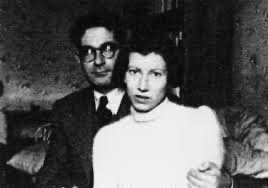
Leone Ginzburg, an anti–fascist intellectual and proponent of the Italian political idea of liberal socialism, was killed in 1944 in Rome by the Nazis. His wife, Natalia Ginzburg, became an important postwar Italian writer. In her novel Lessico famigliare, she addressed Leone’s death and the history of fascism.
Leone Ginzburg was an Italian Jewish intellectual and anti–fascist, born in Odessa in 1909. Among other activities, he was a prolific translator of Russian literature into Italian.
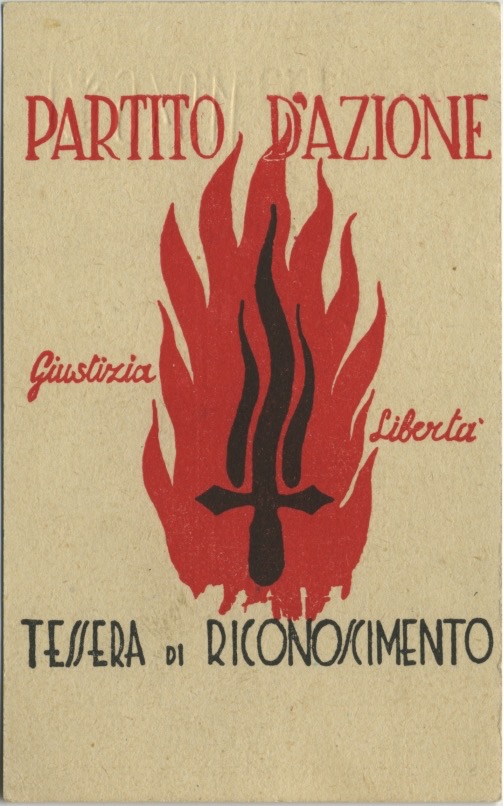
Ginzburg was one of the founders of the Partito d’Azione (PdA) in 1942, a party that represented the peculiarly Italian political ideas of liberal socialism. This was a strand of thought that combined a strong focus on democratic parliamentarianism and checks and
balances in politics with the socialist demand for massive nationalization of key industries and economic planning. The party played an important role in the partisan struggle and was one of the six parties of the Comitato di Liberazione Nazionale (CLN), which coordinated the main anti–fascist political forces from 1943. Earlier, in the 1930s, Ginzburg had been associated with the anti– fascist movement Giustizia e Libertà, an ideological predecessor of
the PdA. Its influential leader, Carlo Rosselli, was murdered by the fascists in 1937 while in exile in France.
In 1938, Ginzburg lost his Italian citizenship, due to the racial laws. In 1940, he was sent into internal exile in Abruzzo, where he remained until the summer 1943. After King Victor Emmanuel III dismissed Mussolini, Ginzburg was able to move to Rome.
Following the German occupation of the city in September 1943, he engaged in clandestine resistance activities, but was arrested by the Nazis, tortured, and died in the notorious Regina Coeli prison in February 1944.
In 1938, Leone Ginzburg married Natalia Levi, a writer and editor from a highly academic, socialist, and partly secular Jewish family from Turin. Her autobiographical novel Lessico famigliare (Family Lexicon) depicts life under fascism, the persecution of Italian Jews, and the death of Leone. It was published in 1963 and won many of Italy’s most prestigious literary prizes.
Natalia Ginzburg later became an independent senator on the list of the Italian Communist Party. Their son, Carlo Ginzburg (born in 1938), is one of the most influential historians of the twentieth century.