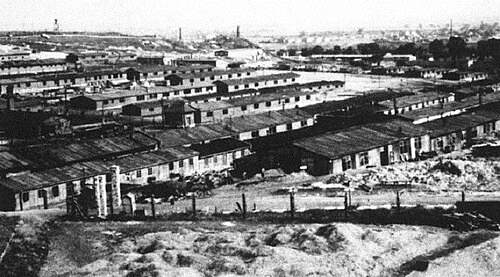
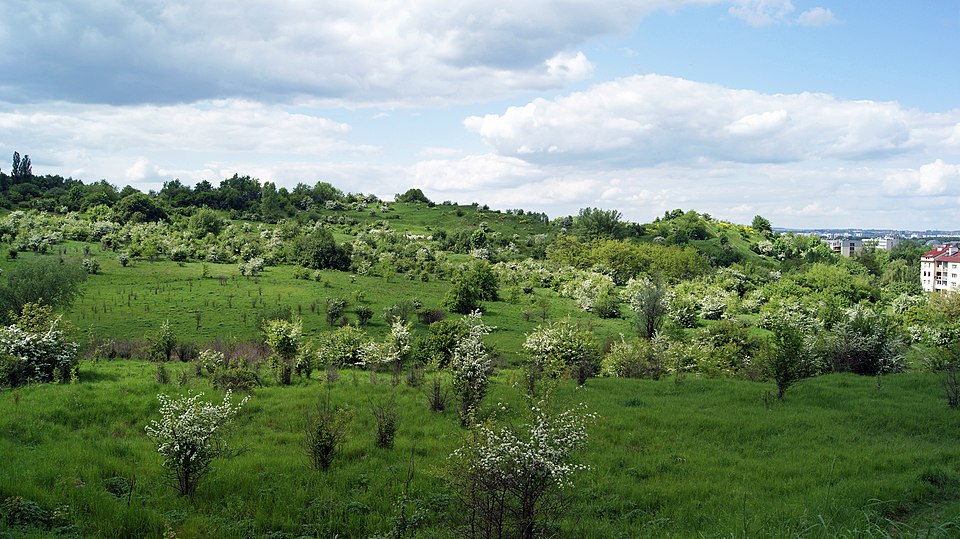
The concentration camp Plaszow was established by the Germans in October 1942 after the liquidation of the Krakow Ghetto previously in March 1943. Initially a forced labor camp for Jews, it was reorganized into a full concentration camp for several other ethnicities in January 1944.
As the northern part of the camp is the site of two former Jewish cemeteries, the infrastructure related to the cemeteries was either repurposed or destroyed. The Grey House at the entrance to the camp, which used to be a residential building of the cemetery staff managed by the Krakow Jewish Congregation, was seized and used as offices and apartments for the camp personnel, with its basement serving as a jail for camp prisoners and detainees awaiting execution.
The three-domed building behind it used to be the cemetery’s funeral home, which was destroyed in 1944 due to the construction of a railway, with only its ruins remaining up to this day. During camp construction, its interiors were used to keep animals, store hay, and a blacksmith shop was also installed. The gravures on the ruins with imagery relating to the Jewish religion, such as stars and fruit symbolic of the holiday of Sukkot, were added later, after its destruction, to establish a commemorative connection to its origins.
The northern margin of the Podgorze Jewish Congregation cemetery was the first site of a mass execution and a mass grave. The Jews murdered during the liquidation of the Krakow Ghetto were also buried there. Whereas the mass grave site partially infringed on the area of the graveyard, the quarantine barracks were built directly upon the graves of the cemetery. Two more mass grave sites are in the camp.
The barracks were used for the isolation of newly arrived prisoners before they would be deloused in the baths west of them. The camp hospital had also been previously established by the Jewish doctors of the Krakow Ghetto, and its equipment was also mostly transferred from other hospitals in the ghetto. Medical care was provided by the original Jewish medical staff; patients could be subject to selections by the Germans at any time, which meant a referral to an extermination camp or execution on the hillock.
The total number of imprisoned people in mid-1944 constituted about 20.000 and about 30.000-35.000 during the operation period. The area constituted 0.8 km2, containing almost 200 buildings. About 6000 people were murdered in the camp Plaszów until its liquidation in August 1944.