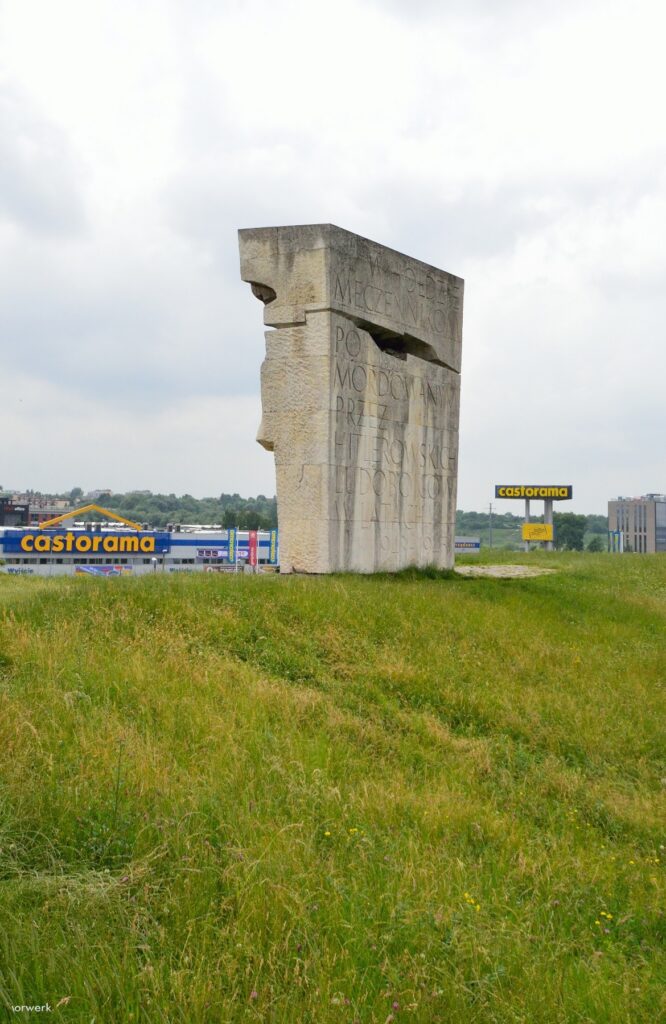
KL Plaszów Museum is an area in Kraków that hosts the remains of the nazi concentration camp. After WW II, the site suffered consistent neglect, but recent initiatives have attempted to address the issue.
During its operation between 1942 and 1945, around 35 000 prisoners passed through it. Jews, as well as Poles and other nations, were placed in the camp with 6 000 people killed on the site. What made it an anomaly and to this day shapes its remains is its placement near the city centre. Over the duration of the Polish People’s Republic, the presence of discourse on Jews and Jewish suffering varied, directly shaping the amount of interest in the area. Overall, citizens’ awareness of the site remained low, with trees growing over the remains of a few structures, and significant parts were absorbed by the city. The end of deterioration of the remains of KL Płaszów came with inscribing the site in 2002 to the Registry of Monuments.
Unfortunately, at that point, over half of the space taken up by the concentration camp was covered by blocks of flats and shops. Due to that, only 37 out of 80 hectares of the original site became legally protected.
Inscription of the site does not lead to stricter regulations of architecture in the area, and the architecture of the neighbourhood keeps densifying. Awareness of the history of the site has risen thanks to initiatives led by the city’s institutions. An open-air exhibition was set up, and a museum is being built on a patch of land outside the inscribed land. Additionally, small concrete blocks were used to signal pre-war Cemeteries. While the situation of the site has improved significantly, the damage caused by the unchecked development of neighboring areas cannot be undone.