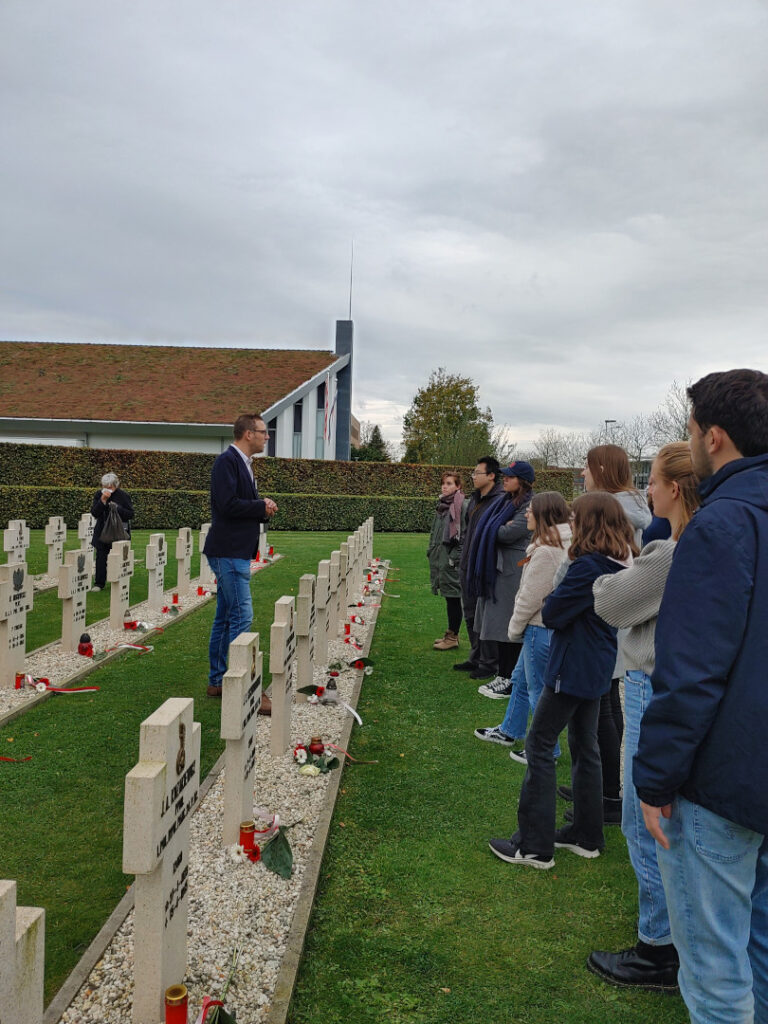
Our journey began in Breda, where all participants came together for the start of the exchange. Coincidentally, it was also the 80th anniversary of Breda’s liberation. We visited the Maczek Memorial and the adjacent Polish Field of Honour, learning about General Maczek and the Polish soldiers who played a key role in freeing the city.
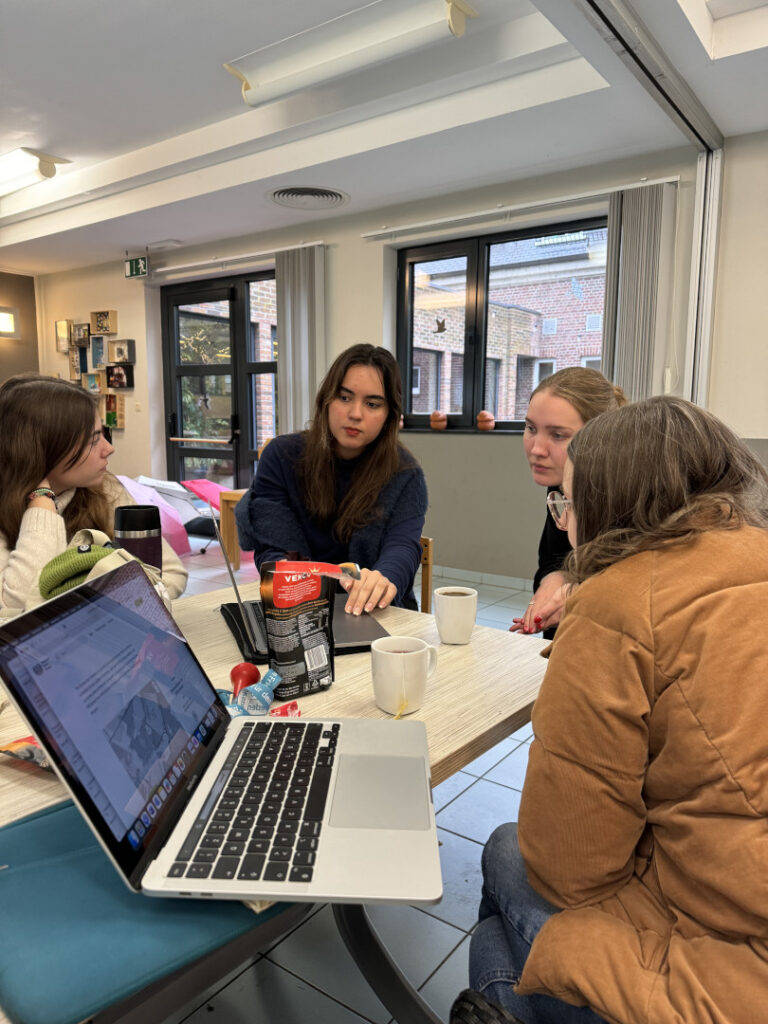
We had the honour of meeting Carolina Maczek, the general’s granddaughter, who shared personal memories of her grandfather that made the history feel incredibly real. The experience inspired many of us to create videos, podcasts, and dig deeper into individual stories of the Polish liberators.
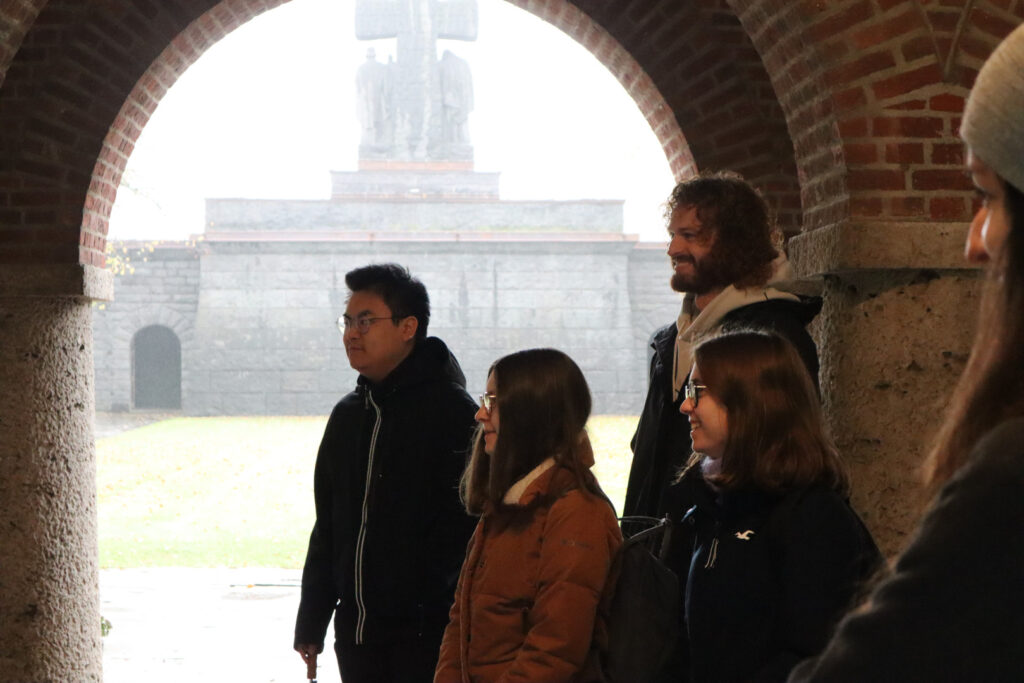
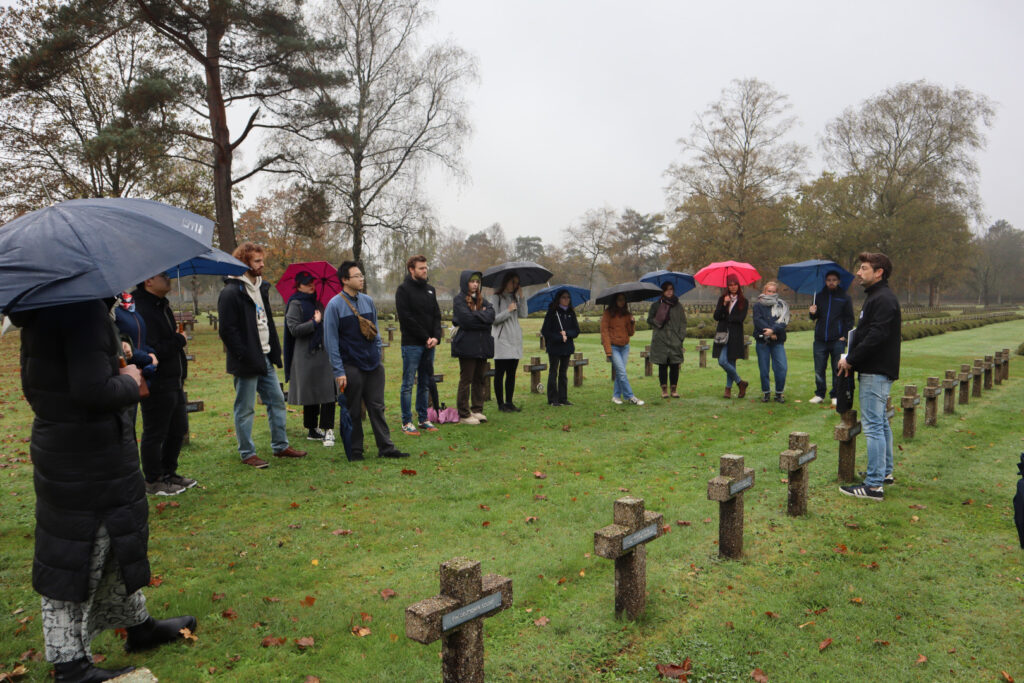
On day two, we crossed into Belgium to visit the German War Cemetery in Lommel, the final resting place of over 39,000 soldiers. Walking among the many rows of graves, the scale of loss was overwhelming. It sparked deep questions about war, memory, and reconciliation.
Through a guided tour, we explored the personal side of history and heard incredible stories about some of the soldiers buried here. We created podcasts, videos, and wrote biographies to bring some of these stories to life, hoping to capture not just facts, but emotions and complexity.
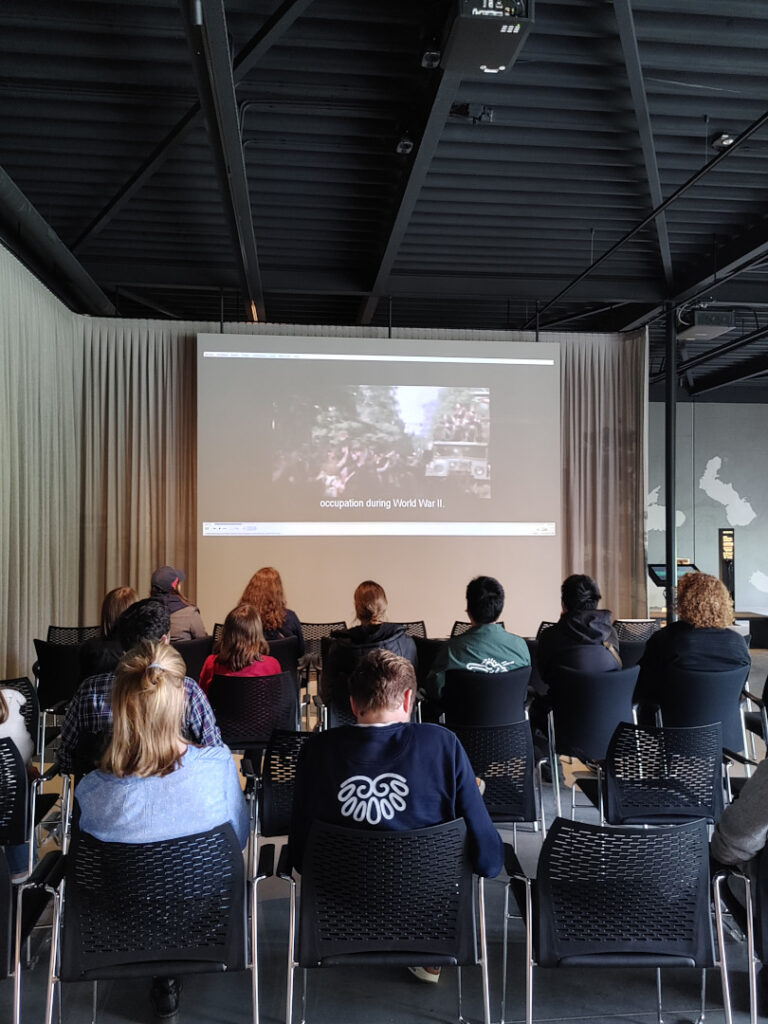
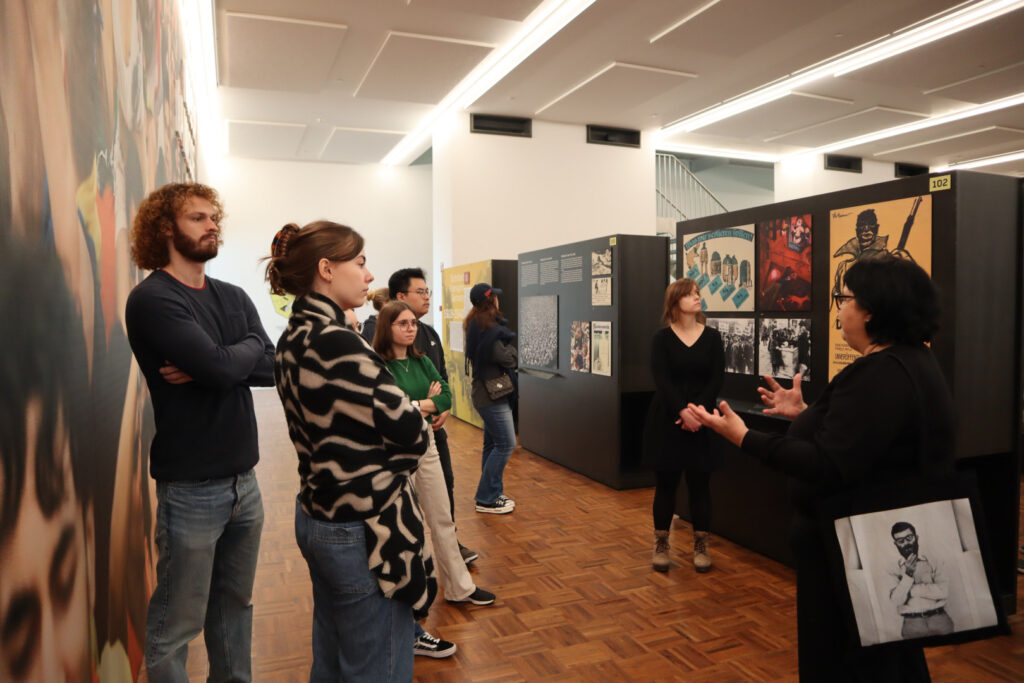
The third day of the exchange brought us to Antwerp, where we visited the MAS Museum and had a guided tour through the city’s WWII history. The exhibition made us think deeply about life under occupation when 25,000 people lost their lives here due to persecution, discrimination and oppression.
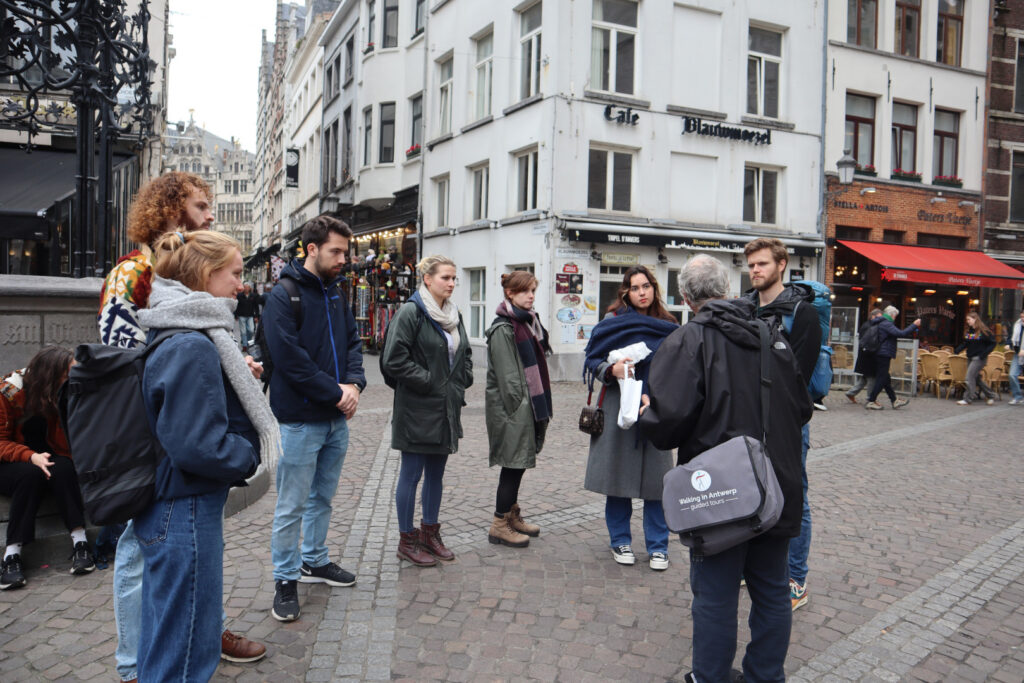
During the city tour, we had the opportunity to dive into Antwerp during war time, from occupation to liberation. Wandering in the streets and seeing the buildings used by the German occupiers, we reflected on the hard choices people had to make: to flee, resist, or collaborate. What would we have done in their place?
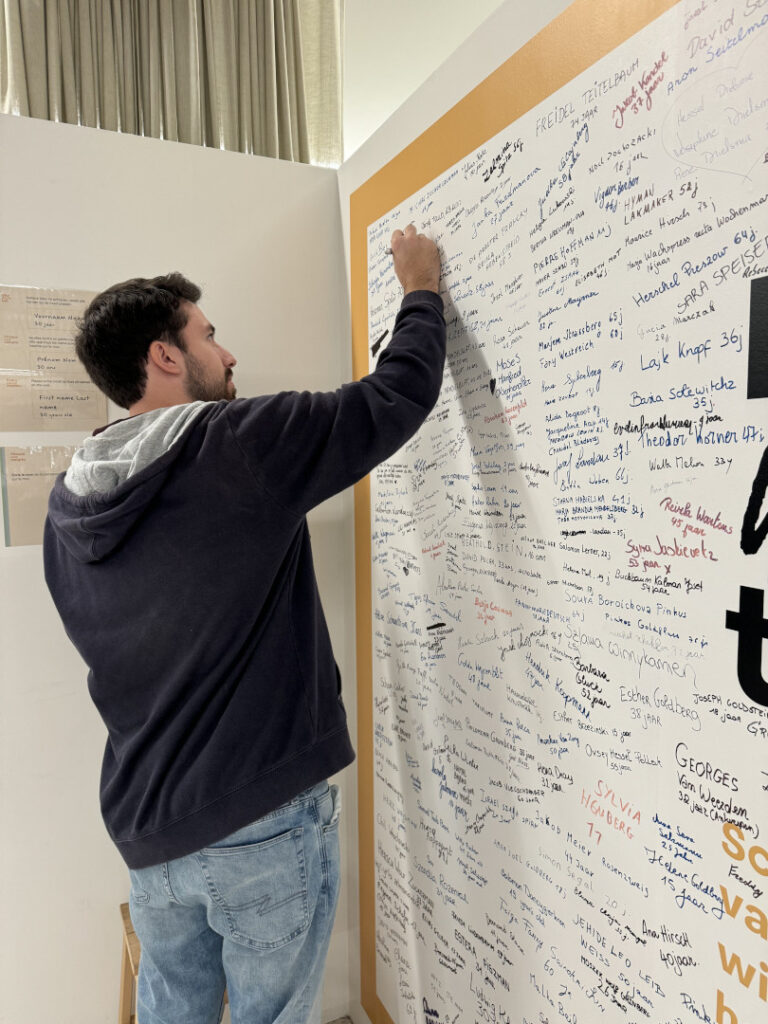
Our final stop was Kazerne Dossin in Mechelen, a former military barrack used as a Nazi transit camp during WWII. From this place, thousands of Jews, Roma and Sinti were deported to the German concentration camps. The museum doesn’t just tell the story of the German occupation of Belgium and the Holocaust, it also puts names and faces to the victims, giving them back their identity.
Our guides led a reflection on the escalation of discriminatory behaviours towards the communities persecuted by the Nazis before and during the war.
After the visit, we participated in ‘Every Name Matters’, a recording project inviting each participant to record the name of a deported person who was in Kazerne Dossin. The person would have either the same age, name, or nationality as each of us, which deepened the experience.