During the Second World War, this museum building served as a prison and as the SS headquarters, starting from 8 September 1943, under the supervision of Commander H. Keppler. After the war, the building returned to private ownership, but on 4 July 1955, it was donated to the state and opened as the Museo Storico della Liberazione.
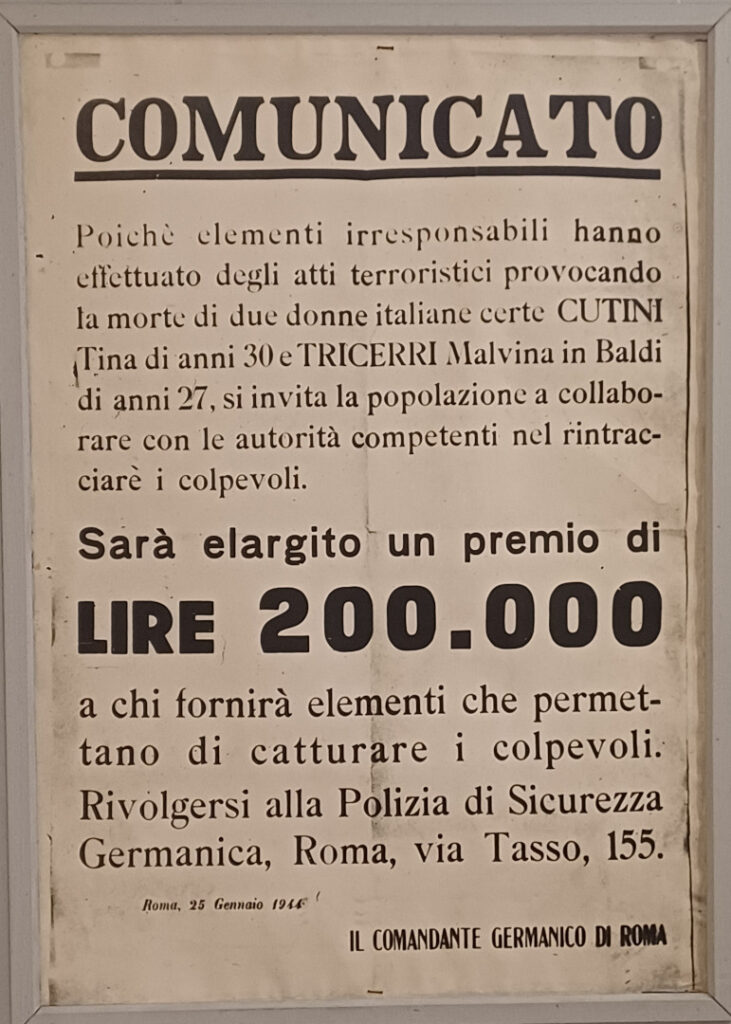
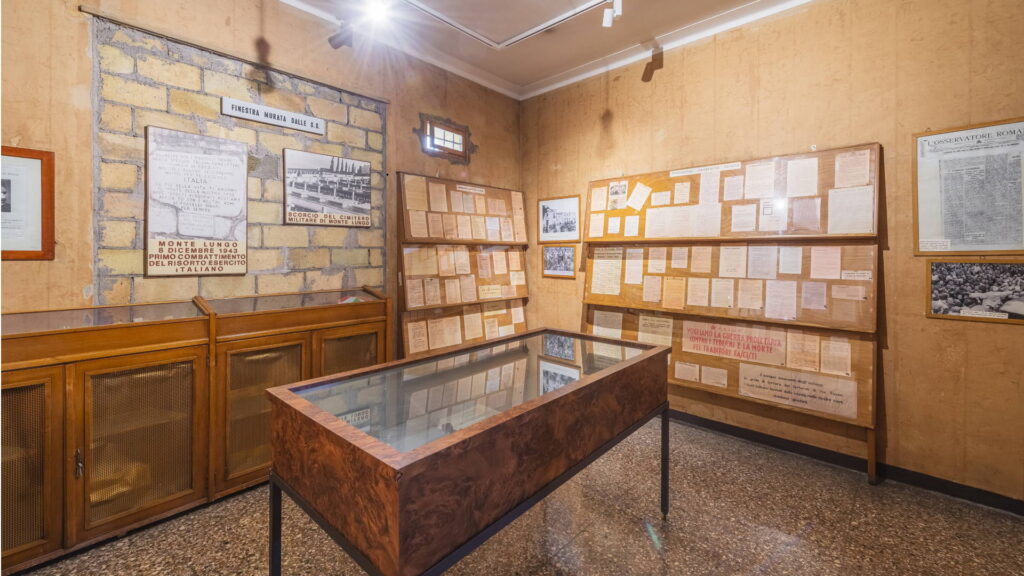
Visiting this museum, we can see lots of different finds, like the structure of the prison that remains the same as in 1944, but also objects of the victims of the massacre in Fosse Ardeatine, as well as clandestine printings, diaries of prisoners, letters, laws and documents published by Nazi regime. All these papers are copies of what we can find in the library “Guido Stendardo” of the Museo storico della Liberazione, which is full of documents regarding Fascism, Nazism, the resistance in Europe, and the deportation and internment in the prisons.
The library’s archive is divided into two parts: the first one Archivio Istituzionale and the other composed of private donation. The Archivio Istituzionale has five sections: Administration of the museum, the original of the documents exhibited in the rooms of museum (1953-1981), display cases of the documents that are exhibited in the rooms (1938-1957) dossier of the protagonist and the main event of Resistance (1908-2009), German documents from 1943 to 1944, and the documents with a didactic aim (1996-2001). This library has an online catalogue on the OPAC of the Lazio region. Starting in 2004 the museum began obtaining new documents from who want to share fact and donate them, so the archive collection was opened.
All these documents are useful for obtaining information about what happened during World War Two in Italy for example the different type of law against Jewish people and the imposition that they had. We can see clandestine newspapers and the one that Nazis and Fascists made to produce misinformation and give false information to the public, also satirical vignettes and pictures.